Why Are Your Employees Disengaged?

35 executives and HRDs swapped roles during an eBloom workshop. Real obstacles, concrete solutions: here is what we discovered.
Why Are Your Employees Disengaged?
Published on
May 26, 2026

What really stops teams from engaging? Not in theory. Not according to a generic report. But within Belgian companies, on a daily basis, according to those living it from the inside.

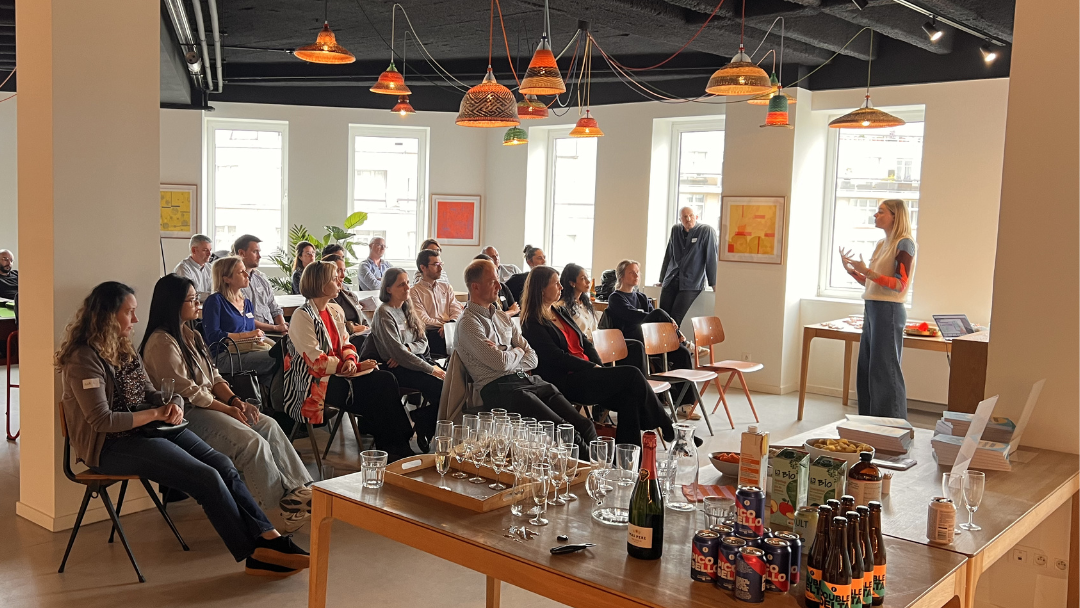
In May 2026, eBloom gathered 35 executives and HRDs for a workshop-style afterwork. One of the exercises: each participant took on a role different from their own (employee, manager, or HR) and worked in groups to identify the obstacles to engagement specific to that role—and, more importantly, the solutions to overcome them. The result: insights that most would never have articulated from their own seats.

Satisfied or Engaged?

Before identifying obstacles and solutions, we must align on a fundamental question: what exactly do we mean by "engagement"? Satisfaction and engagement are two similar but distinct concepts, and the nuance deserves to be clearly defined.

A satisfied employee is "at peace": they don’t complain; they stay. They find their working conditions acceptable, their salary fair, and their environment comfortable. However, this peace doesn't necessarily drive them to go the extra mile. An engaged employee is active: they involve themselves, contribute beyond what is asked, and pull the organization forward. It is a state visible in the quality of work, the solidarity between colleagues, the ability to weather difficult periods, and in both individual and collective performance.

In Belgium, only 11% of employees reach this second state, placing the country 27th out of 38 in Europe (Gallup, 2026). It was this active engagement, rather than simple satisfaction, that guided the evening’s discussions.

The Employee Perspective: When Company History Stifles the Will to Act

Participants playing the "employee" role highlighted a barrier that data rarely captures easily: the weight of the past. "We tried that, and it didn't work." This seemingly mundane sentence encodes years of accumulated frustration—ideas expressed but never heard.

Added to this is the fear of how one is perceived. Speaking up means exposing oneself. This isn't cowardice; it’s a very human social calculation.

💡 The eBloom Tip : One of the most effective ways to lift this barrier in practice is to guarantee feedback anonymity. With Click&Bloom, employees answer short, regular questions in total confidentiality: no names, no individual data visible. What people would never say in a meeting, they eventually write down. And that is often where the real signals are found.

The group concluded that the employee is not a passive spectator of their own engagement; they are a full-fledged actor in it. It all starts with "daring to take the first small step": an idea expressed, a conversation initiated. What helps in taking that step is better self-knowledge, understanding one’s needs, values, and what truly matters, to express them clearly. On the organizational side, the equation is simple: when an employee sees their idea taken into account and receives concrete recognition from colleagues or management, the desire to get involved returns.

The Manager Perspective: When Structure Prevents Proximity

The manager stands at the crossroads of all tensions. Their role in engagement is massive: 70% of the variance in team engagement depends on the manager (Gallup, 2024). But to play this role fully, the structure must allow it.

The identified obstacles affect various types of organizations. In pyramidal structures, too many hierarchical levels stifle autonomy and lengthen decision-making cycles. In matrix organizations, it is clarity of roles that is lacking: when multiple reporting lines coexist, it isn't always clear who decides what. Added to this is availability: an overworked manager simply doesn't have the time to listen. When this lack of proximity persists, a fatalistic disengagement eventually sets in on both sides.

Concrete paths exist to address these points. Clarifying roles often involves a simple but rarely performed task: putting in writing who is responsible for what and ensuring everyone knows it. Regarding availability, integrating team management into a manager’s KPIs and associated recognition changes everything: what is measured gets done; what is recognized is repeated.

"We ask managers to create trust, but we don't give them the time to build the relationship."

However, levers do exist. Targeting the right managers during recruitment and promotion is perhaps the most structural decision: interpersonal skills matter as much as technical expertise. But identifying the right profiles isn't enough; they must be equipped. A manager who has never learned to conduct a feedback interview, detect weak signals in their team, or manage interpersonal tension is left alone in situations for which they have no tools. Training managers in the human realities of the role, not just management tools, is an investment that pays off directly in engagement. It is this combination (the right profile, well-trained and well-equipped) that allows the manager to do what no one else can: be present, embody clear direction, and create the conditions for everyone to dare to speak up and get involved.

The HR Perspective: Legitimizing the Approach Before Deployment

Participants in the HR role expressed a central barrier: obtaining leadership support. Behind this barrier lie two recurring causes. The first: a lack of data to convince. To invest in engagement, one must first know how to quantify the cost of inaction. Yet, this calculation is rarely performed.

However, the consequences of disengagement are very real and measurable: absenteeism costs an average of €1,600/employee/year (SDWorx, 2024), 1 in 4 Belgian employees is actively looking for a new job (Acerta & Stepstone, 2025), and a recruitment via an agency costs approximately €15,000 (Jobat).

The second cause: engagement is too often viewed as the sole responsibility of HR. This isolates them and exhausts the initiative before it even takes flight.

Yet, the impact of a true engagement policy is documented: companies that invest in it see -81% absenteeism and -43% turnover among their most engaged employees (Gallup). These figures speak to any leadership team.

The role of HR is not to carry everything. It is to create the conditions for every level to take action. Launching pilot projects in a targeted department allows for demonstrating impact before scaling up and speaking in terms of results, not just intentions. Relying on peer exchanges between HR professionals helps with benchmarking and prevents isolation. Finally, investing in manager mentoring and giving them concrete levers allows HR to multiply their impact without carrying the weight alone.

What This Evening Confirmed: Engagement is Everyone's Business

Engagement is not a mysterious problem. The obstacles are known, nameable, and present at every level of the organization. What emerged from this workshop is not that everything is going wrong—it’s that everyone, at their level, has real room for maneuver.

The employee can dare to speak up. The manager can create the space for that to happen. HR can provide the tools and unite the forces to make it last. These three dynamics do not work without one another. When they align, engagement stops being a meeting topic and becomes a daily reality.

eBloom helps organizations create precisely these conditions by providing each level with the right tools at the right time.

Love This Content? Get It Delivered Straight to Your Inbox!
Never miss an update on the latest HR trends, insights, and strategies. Subscribe now to:
Check - Elements Webflow Library - BRIX Templates
Receive expert tips and actionable advice to elevate your HR practices.
Check - Elements Webflow Library - BRIX Templates
Stay ahead with the latest industry trends and best practices.
Check - Elements Webflow Library - BRIX Templates
Be the first to access exclusive eBloom resources.
Thank you! Your submission has been received!
Oops! Something went wrong while submitting the form.
How To Reduce Employee Burnout
Download Our Free Guide
Repeated angled tablet screens showing a digital guide titled 'How to Reduce Employee Burnout in 2024' with an image of a stressed man holding his head and a purple logo.
2025 Market Report
Download Our Free Report

From HR digitalization to AI integration and new employee expectations, the human resources sector is rapidly changing. Based on responses from over 450 Belgian companies, our report gives you a head start to prepare your teams and strategy for the realities of tomorrow.

Illustration of two hands in blue sleeves holding a golden geometric shape with text reading '2025 Market Report: Latest insights and trends in people management practices.'
FREE HR Health Check – Discover Your Strengths & Areas for Improvement
How well is your HR department performing? Our HR Health Check is a quick yet insightful assessment designed to evaluate key aspects of your HR function.
Check - Elements Webflow Library - BRIX Templates
Answer a structured questionnaire covering critical HR areas
Check - Elements Webflow Library - BRIX Templates
Get a personalized profile with strengths and areas for improvement
Check - Elements Webflow Library - BRIX Templates
Receive tailored insights on how to enhance employee experience, engagement, and HR efficiency
Check - Elements Webflow Library - BRIX Templates
No cost, no commitment – just valuable, actionable feedback
Discover Your Leadership DNA – Take the Free Assessment
Your leadership style and company culture shape everything—from team performance to business success. Is your approach truly aligned with the results you want to achieve? In just 5 minutes, you'll:
Check - Elements Webflow Library - BRIX Templates
Gain clarity on your leadership strengths and blind spots
Check - Elements Webflow Library - BRIX Templates
Assess your company culture and its impact on performance
Check - Elements Webflow Library - BRIX Templates
Uncover actionable insights to enhance engagement and efficiency
Check - Elements Webflow Library - BRIX Templates
Find out how your leadership style is shaping your organization!
Is Your Organization Truly Ready to Scale? – Take the Free Assessment
Moving from 10 to 100 employees is the ultimate test for your company culture. Don't let your growth outpace your structure. Take our rapid diagnostic to identify your blind spots before they become bottlenecks.
Check - Elements Webflow Library - BRIX Templates
Get your Maturity Score (out of 40) in just 3 minutes.
Check - Elements Webflow Library - BRIX Templates
Identify hidden risks in your culture and processes.
Check - Elements Webflow Library - BRIX Templates
Receive a personalized roadmap to secure your next growth phase.
Take the 3-Minute Test
Is your culture built to last?
In a world of constant pressure, only resilient companies truly thrive. Discover your organization's unique resilience score in 5 minutes and get a clear picture of your strengths and weaknesses.
3D illustration of a man in blue shirt and pants bouncing on a large blue spring.
Go from theory to action.
Ready to put these ideas into practice? Our Freemium plan gives you the essential tools to listen to your team and build a stronger culture. Launch targeted surveys, activate an idea box, and celebrate successes, all for €0.
eBloom Freemium promotion with a laptop showing templates, surrounded by feature icons including eNPS Calculation, PSR Questionnaire, Team-building Organization, On/Off-boarding surveys, Idea Boxes, and Birthday Announcements.
Is your company truly resilient?
Assess the 5 pillars of your resilience (human capital, agility, etc.) for free. Identify your strengths and discover actionable steps to strengthen your organization in the face of change.
Laptop displaying a webpage titled 'Assess your company's resilience' with a cartoon figure flying beside it over a cloud.
From Nostalgic Leader to NextGen Leader – Get the Must-Read Leadership Guide
The workplace is evolving—are you evolving with it? Leader NextGen by Margot Wuillaume is the ultimate guide to adapting your leadership style, engaging new generations, and retaining top talent in a changing world.
In this book, you’ll discover:
Check - Elements Webflow Library - BRIX Templates
The 4 major workplace transitions shaping leadership today
Check - Elements Webflow Library - BRIX Templates
How to engage and retain young talent for long-term success
Check - Elements Webflow Library - BRIX Templates
Actionable strategies and real-world examples to elevate your leadership
Check - Elements Webflow Library - BRIX Templates
Now available in French – Start your transformation today!
Master the Art of Talent Management in 2025 – Watch the Webinar Replay
Presentation slide titled Leadership & Management NextGen, with the subtitle mastering talent management in 2025, speaker Margot Wuillaume shown in video inset, dated Dec 2024.
This webinar is designed for future leaders and managers. Learn the latest strategies in leadership and talent management to excel in a constantly evolving world. Discover how to attract and retain key talent within your organization. Don't miss this enriching replay, packed with real-world examples and practical advice!

Key topics:
Check - Elements Webflow Library - BRIX Templates
Feedback Culture
Check - Elements Webflow Library - BRIX Templates
Participative Management
Check - Elements Webflow Library - BRIX Templates
Digital Transformation
Check - Elements Webflow Library - BRIX Templates
Dynamic Leadership
Check - Elements Webflow Library - BRIX Templates
People-Focused Leadership
Check - Elements Webflow Library - BRIX Templates
Attraction and Retention of Talent
Watch the Replay - 2026 "Return to work" Reform
Missed our live session on the new Belgian legislation? Catch up now to protect both your budget and your talent. Learn how to transform a legal constraint into a performance driver.

Key topics:
Check - Elements Webflow Library - BRIX Templates
30% Solidarity Tax
Check - Elements Webflow Library - BRIX Templates
Reintegration Mandates
Check - Elements Webflow Library - BRIX Templates
Early Warning Signs
Check - Elements Webflow Library - BRIX Templates
"Re-boarding" Strategy
Check - Elements Webflow Library - BRIX Templates
ROI of Prevention
Build a more resilient culture
Understand the 5 essential pillars and the strategies that enable teams to thrive sustainably in the face of uncertainty.
Cover of a white paper titled 'The virtuous circle of business resilience' with the eBloom logo and a blue spiral design, dated August 2025.
Measure your eNPS for free
With eBloom, every eNPS score becomes an opportunity for listening, dialogue, and transformation.
Net Promoter Score scale with emoticons from 0 (detractors, red sad faces) to 6 (yellow neutral faces), 7-8 (passives, light green smiling faces), and 9-10 (promoters, dark green happy faces) with a small rocket taking off from the right side.

Download the 2024 Market Research