.avif)


Absenteeism is no longer just an administrative burden to be endured while waiting for an employee's return. With the 2026 Return-to-Work Reform now in effect, every day of prolonged absence directly impacts the cash flow of Belgian companies.
However, a fundamental distinction must be made: while a company cannot cure a virus, it holds immense power over an employee's decision to go on leave or stay engaged. Combating absenteeism is, above all, about driving engagement.
The manager is your first line of defense. According to Forbes (2023), nearly 70% of employees state that their manager has more impact on their mental health than their doctor.
Given that 70% of the variance in team engagement is determined by the manager (Gallup, 2025), evolving this role is a matter of urgency. Beyond technical expertise, the core function expected today is to be a true "people manager." This transformation requires advanced training in psychological safety and active listening, but also a structural shift: integrating engagement Key Performance Indicators (KPIs) into managers' annual objectives. By officially valuing those on the front lines of employee engagement, companies anchor absenteeism prevention into their performance culture.
The second lever is moving away from "surprise" mode. Long-term sick leave is rarely sudden; it is almost always preceded by "weak signals" that we call mental distancing.
The employee is physically present but has already "resigned" psychologically. They become cynical, their energy drops, and they withdraw from interactions. Implementing continuous feedback through Pulse surveys provides an immediate safety valve, identifying risks before they turn into medical certificates.
Career inertia, the feeling of being stuck in a role with no growth prospects, is a major exhaustion factor often underestimated by HR departments. In Belgium, only 19% of workers have benefited from internal mobility over a five-year period (Right Management, 2025). According to KU Leuven, this stagnation feeds "long-term regret," generating chronic stress and deep anxiety. These psychosocial issues now account for 37% of disability cases.
To counter this, promoting internal mobility should no longer be seen as a luxury, but as a "vaccine" against disengagement. An employee who changes roles within the same organization is 3.5 times more likely to remain fully engaged. By investing in skill development and offering clear perspectives, companies don't just retain talent, they statistically double their engagement lifespan.
A lack of control over one's professional daily life is one of the biggest accelerators of burnout. According to the Future Forum (2023), employees dissatisfied with their level of flexibility are 43% more likely to feel burned out than those with more freedom.
This quest for autonomy isn't just about hours; it impacts overall health, as workers with full flexibility report 29% higher productivity. Autonomy acts as a stress regulator, increasing job satisfaction and general well-being.
However, this shield is fragile if it doesn't rest on a solid ethical foundation. Today, 61% of workers report being exposed to value conflicts, with a third facing major ethical issues that can jeopardize their physical or mental health (Vie-Publique.fr). These situations of "ethical dissonance" lead to sleep disorders and can trigger severe depressive symptoms. Fighting absenteeism means guaranteeing a framework where the meaning of work and company values are aligned with those of the employees.
Employers must assert themselves as active players from the very first weeks of absence to avoid reaching the six-month "point of no return," where the risk of permanent exclusion from the workforce becomes critical. This process starts with opening an authentic dialogue to break the silence. A simple question like "What do you need today to continue doing your job well?" can be enough to defuse a complex situation.
In this spirit of prevention, it is essential to promote spontaneous consultations with occupational health services. Actively informing employees, whether they are still working or already on leave, that they have the right to seek confidential medical advice allows for personalized adjustments. By exploring job or schedule adaptations before incapacity becomes permanent, the company avoids absence at a lower cost and with a much higher chance of success.
The 2026 reform marks a definitive turning point: absenteeism management is no longer a "medical" issue; it is a strategic management challenge. By investing in engagement and early detection, you aren't just avoiding financial penalties; you are protecting your most precious capital and ensuring the long-term viability of your organization.
Every weak signal ignored today is a financial and human cost for tomorrow. The question is no longer whether you should act, but how ready you are to anticipate.
Ready to transform your absenteeism management?
👉 Discover how eBloom helps you detect weak signals today.
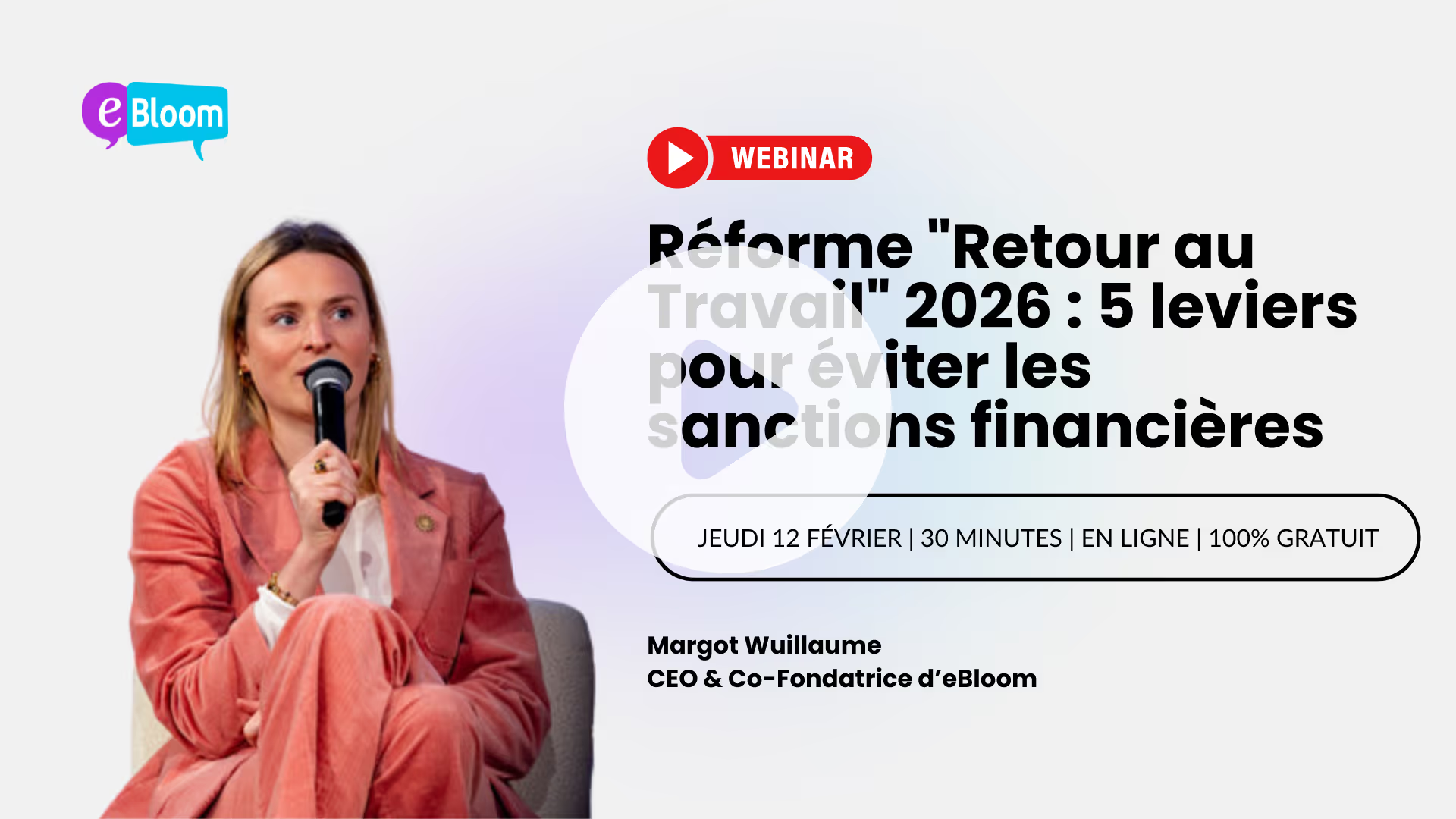
👉 Watch the replay of our webinar dedicated to the 2026 reform.
.png)


From HR digitalization to AI integration and new employee expectations, the human resources sector is rapidly changing. Based on responses from over 450 Belgian companies, our report gives you a head start to prepare your teams and strategy for the realities of tomorrow.
.jpg)
.avif)

.avif)



.avif)

.jpg)