

A once-motivated employee now gets through their tasks without enthusiasm, almost on autopilot. It isn't laziness, nor a passing slump. It might be brownout.
Brownout is a form of work-related exhaustion caused by a loss of meaning at work. Unlike burnout, which drains people of their energy, brownout sets in when an employee no longer sees the point of their work, even though they keep doing it as usual.
The phenomenon is hard to quantify: unlike burnout, brownout has no recognised measurement tool yet. But the signs of disengagement are clearly there in Belgium: according to Great Place to Work's 2025 European Workforce Study, conducted with Vlerick Business School, only 54% of Belgian employees consider their organisation a great place to work, compared with a European average of 59%. Brownout is insidious and often goes unnoticed: the employee is still there and seemingly productive, which makes it harder to spot than burnout.
In this article, you'll learn what brownout really is, how it differs from burnout and boreout, and above all how to spot it in your teams before it leads to someone leaving.
The term "brownout" comes from the world of electricity. It refers to a drop in voltage in a power grid without a complete outage, unlike a "blackout", as explained in this Malakoff Humanis guide to brownout. Applied to the workplace, the image speaks for itself: the employee keeps running, but at reduced power.
In the workplace, the term was popularised in 2015 by Michael E. Kibler, an American consultant and researcher, in a Harvard Business Review article. He described "executive brownout": high-performing managers who, under silent and constant overload, gradually lose their passion for their work and disengage, with no visible crisis. Since then, the term has broadened to all employees and refocused on the loss of meaning.
In practice, brownout shows up as:
This last point is key: brownout often stems from a values misalignment, not from a lack of skill or effort.
All three syndromes relate to work-related exhaustion, but their causes and symptoms differ significantly. Confusing them means preventing them poorly.
A common misconception: burnout isn't just about overload. According to the WHO definition, it combines exhaustion, a cynical distance from work and reduced effectiveness. Disillusionment is therefore part of it, and that's where the two syndromes overlap. The difference lies in exhaustion: in burnout, the person is drained of energy; in brownout, they're still holding on, but their work has lost its meaning.
An employee experiencing brownout may be just as busy as before, sometimes busier, sometimes less so: workload simply isn't the right indicator. What has broken down is their relationship with the meaning of their work, as highlighted in this Bpifrance report on brownout in the workplace.
Because it doesn't come with sudden exhaustion, brownout is particularly hard to detect. The signs are often masked by apparent professional normality.
Here are the signs that should alert a manager:
The risk of doing nothing is real: according to the same Malakoff Humanis guide, most untreated cases of brownout end with the employee leaving. For the company, that means losing a competent person, often with no visible warning beforehand.
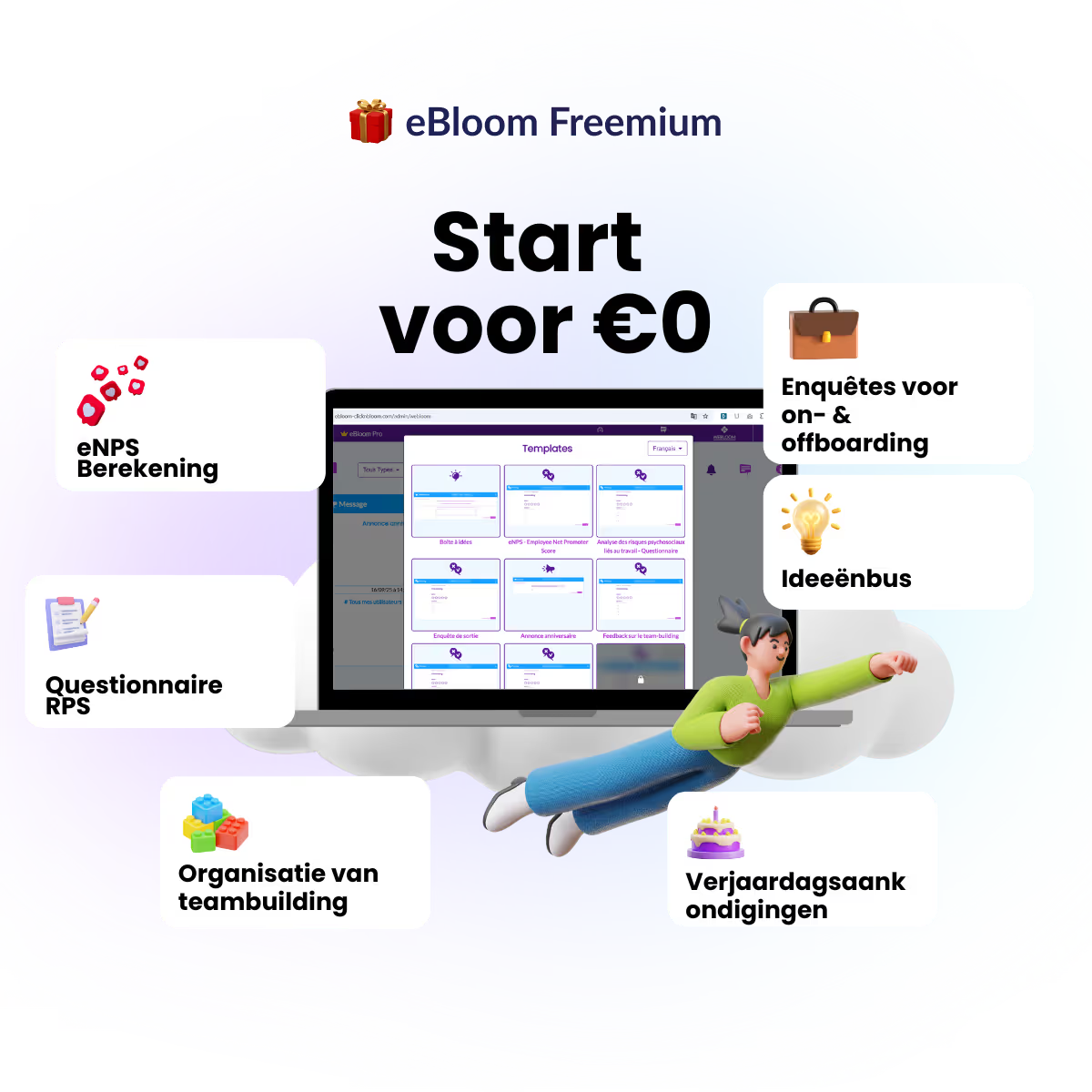
Brownout falls under psychosocial risks. In Belgium, psychosocial risk analysis is a legal obligation for every employer, who must include it in their workplace well-being prevention policy. eBloom lets you carry out your psychosocial risk analysis online, as simply as possible.
In practice, three levers help you act before disengagement sets in:
That's exactly what our continuous, anonymous feedback tool does: it picks up signs of disengagement over the months, before they turn into a decision to leave.
What's the difference between brownout and quiet quitting?
Quiet quitting is a behaviour (doing the bare minimum), whereas brownout is a state of distress linked to a loss of meaning. The former can be a consequence of the latter.
Is brownout recognised as an occupational disease?
No. In Belgium, neither brownout nor burnout appears on the list of occupational diseases kept by Fedris, the Federal Agency for Occupational Risks. Burnout is recognised as a "work-related illness": the person receives benefits from their health insurance fund, as for any standard incapacity for work, and not under the occupational disease scheme. In both cases, they fall under the psychosocial risks that employers are legally required to prevent.
How long does brownout last?
There's no typical duration: brownout sets in gradually, sometimes over several months, which makes it hard to pinpoint precisely.
Can an employee experiencing brownout still perform well?
Yes, on the surface. That's precisely what makes the syndrome hard to detect: visible performance can remain stable while real engagement declines.
Does remote work encourage brownout?
It can make it worse by reducing the informal exchanges that give work its meaning, but it isn't a direct cause.
At a time when top talent rarely leaves for salary reasons, but rather for lack of listening and prospects, detecting brownout before it sets in makes all the difference. With Julia, eBloom's AI assistant, you don't just measure your teams' engagement: you identify weak signals of disengagement before they become visible, and give your managers the keys to act early.
📅 Find out how our employee pulse tool can help you detect signs of brownout in your teams.


Van de digitalisering van HR tot de integratie van AI en de nieuwe verwachtingen van medewerkers: de humanresourcessector is in volle verandering. Ons rapport, gebaseerd op de antwoorden van meer dan 450 Belgische bedrijven, geeft u een voorsprong om uw teams en strategie voor te bereiden op de realiteit van morgen.