

Updated on 25 November 2026
Burnout, or occupational exhaustion syndrome, is linked to chronic workplace stress that has not been resolved: according to the World Health Organization, it is not a medical condition, but an occupational phenomenon. In Belgium, nearly one in three workers is now at risk of burnout, and almost 56,000 people have been on sick leave for more than a year because of it.
Burnout in Belgium is no longer a marginal issue. Long-term sick leave due to burnout has risen by almost 60% in four years, and each case means an exhausted person, an affected team and months of absence. Yet burnout is still poorly understood: is it an illness? Is it only about work overload? What can employers do?
In this article:
Since 1 January 2022, burnout has been included in the WHO International Classification of Diseases (ICD-11), under code QD85. This classification does not only list diseases: it also covers factors that influence health, such as work-related problems. That is where burnout is listed.
The WHO defines it as a syndrome resulting from chronic workplace stress that has not been successfully managed. The definition does not say who should have managed this stress: it is not an individual weakness. Burnout is characterised by three dimensions:
The term refers specifically to the work context. In French, it is also called syndrome d’épuisement professionnel (occupational exhaustion syndrome), the term used in the Belgian Royal Decree of 6 March 2024.
In Belgium, the Superior Health Council stresses that burnout is a process: it results from prolonged exposure (more than six months) to persistent stress at work, to an imbalance between what people give and what they receive, or between their expectations and the reality of their job.
No. Work overload is not part of the definition of burnout: the WHO refers to chronic workplace stress, without saying where it comes from. Overload is, however, the most frequently cited cause, but not the only one.
In a study by the FPS Employment, occupational physicians and GPs recorded the work-related factors of 190 people who consulted them for distress at work. 64% of them were diagnosed with burnout by their doctor.
Workload comes first, but other factors weigh almost as heavily. This is also what the WHO definition says: it refers to chronic stress, not overload.
Only burnout has an official definition. To find out more, read our article on brownout and how it differs from burnout and boreout.
Burnout sets in gradually, often without the person realising it. The signs described by the FPS Employment study and by the French National Authority for Health (HAS) fall into several groups:
These signs are not specific to burnout: they can also have other physical or psychological causes. It is their combination, their duration and their link with work that should raise the alarm.
The risk factors are well identified by the FPS Employment: workload and time pressure, emotional demands, role conflicts, but also a lack of resources (support, feedback, autonomy) and organisational change or job insecurity. Recent research also highlights the importance of direct leadership.
According to a study by the Social and Economic Council of Flanders cited by INAMI (the National Institute for Health and Disability Insurance), work overload is the main risk factor. Among employees, the risk almost triples when the work is emotionally demanding or when support from management is insufficient.
Burnout stems from work, but it does not exist in a vacuum. Personal traits (such as perfectionism) or difficulties in private life can make a person more vulnerable and speed up exhaustion. This is why the Superior Health Council describes burnout as a multifactorial process.
What defines burnout, however, remains work-related exhaustion. Distinguishing between what comes from work and what comes from private life is a matter for the doctor.
You might think that meaningful work protects against burnout. That is not always the case. Researchers at Ghent University (UGent) found that meaning at work is the highest-rated dimension of well-being among Belgian workers, and yet one in three workers is at risk. Those who find their work highly meaningful may be tempted to go beyond what is sustainable, especially when demands are high and resources are insufficient.

Nearly one in three workers is at risk. According to a UGent survey of 1,333 Belgian workers, 31% fall within the burnout risk zone, including 14% at very high risk. The researchers compare this result with Securex measurements made with the same tool: the at-risk group accounted for 24% of workers in 2018 and 29% in 2021.
Almost 56,000 people have been on sick leave for more than a year. According to INAMI figures, 55,802 people were on invalidity (incapacity for work of more than one year) due to burnout at the end of 2025, compared with 35,145 at the end of 2021, an increase of 58.78% in four years. Including depression, the figure reaches 155,360 people.
Why are these two figures so different? Because they do not measure the same thing. The first is a self-reported risk in a survey: it does not mean that these people have or will have burnout. The second only counts people who have been on sick leave for more than a year: shorter absences are not included.
The answer depends on what is being measured: who is most often on sick leave, where sick leave is rising fastest, and who is most at risk.
The largest group on long-term sick leave: women. They account for more than seven in ten people on sick leave for more than a year due to burnout (39,950 women out of 55,802, according to INAMI’s breakdown by sex). Yet when looking at people at risk of burnout, the UGent survey finds no significant difference in risk between men and women. Why this gap? The available studies do not explain it.
Where sick leave is rising fastest: young people and the self-employed.
Most at risk (by age group): 35 to 49-year-olds. According to UGent, 36% of them are in the risk zone, more than younger or older workers.
The risk of burnout varies widely from one region to another. According to the UGent survey, 44% of workers in Brussels are at risk of burnout, compared with 36% in Wallonia and 28% in Flanders.
In Brussels, long-term sick leave is also rising faster than elsewhere. According to INAMI’s regional breakdown, the number of people on sick leave for more than a year due to burnout in the Brussels-Capital Region rose from 3,376 at the end of 2021 to 5,812 at the end of 2025, an increase of around 72%, compared with around 60% in Flanders and 52% in Wallonia.
The UGent study does not explain this gap. It does show, however, that compared with Flemish workers, workers in Brussels more often report a heavy workload (59% vs 44%) and interpersonal conflicts (27% vs 15%), and less often feel appreciated for their work (49% vs 59%).
There is no single cause.
Both the WHO and the Superior Health Council are clear: prevention starts with how work is organised. Workload, working hours, pointless tasks, clarity of roles: this is where the first levers lie. Individual initiatives (sport, meditation, stress management) have their uses, but they are not enough when the problem lies in how work is organised.
Workers themselves confirm this: the measures they consider most effective are adapting tasks and working hours (60%), training managers to support their teams (50%) and conversations with their manager (49%).
In Belgium, every employer is legally required to have a policy to prevent psychosocial risks at work, as the FPS Employment points out. Assessing these risks is the starting point: it identifies what, in the way work is organised, exposes teams to stress and burnout.
Since 2022, the WHO has explicitly recommended training managers in mental health, so that they can prevent stressful work environments and support employees who are struggling. This is a real issue: only half of Belgian workers currently feel that their manager helps them do their job well.
The people who burn out are often the most committed, the ones who don’t say anything. Waiting for them to raise the alarm often means waiting too long. The UGent researchers recommend not waiting until symptoms become visible, but regularly measuring how teams experience their work.
Fedris offers a free prevention programme, in the form of a support pathway, for workers showing the first signs of work-related burnout. The aim: prevent the situation from getting worse and reduce the risk of long-term sick leave. It is open to workers in the private sector and in municipal and provincial administrations, who are at work or have been on sick leave for less than two months. The worker submits the application, using a form co-signed by their GP, occupational physician or psychosocial prevention adviser. The programme is free and lasts a maximum of two years.
In short: it is not a medical condition, but Belgian law recognises it as work-related, and a doctor can sign the person off work.
Under Belgian law, it is recognised as work-related. Since the Royal Decree of 6 March 2024, occupational exhaustion syndrome, or burnout, among workers exposed over a long period to psychosocial risks at work falls within the category of “work-related diseases”. The word “disease” is used here in a legal sense, not a medical one: this category has existed since 2006 to allow Fedris, the Federal Agency for Occupational Risks, to carry out prevention measures.
In principle, it is not an occupational disease. Burnout is not on Fedris’s list of occupational diseases, so it does not entitle the worker to Fedris’s specific compensation. A worker can try to have it recognised by proving that their burnout was directly caused by their work, but this is difficult to prove, as other factors are often involved. In practice, a person with burnout is generally signed off work by their doctor, as with any other condition.
This status has a concrete consequence: it gives access to a free support programme, presented above in the prevention section.
💡 Good to know: much of the information online about burnout recognition concerns other countries, notably France, whose system is different.
For the WHO, depression is an illness, a mood disorder, whereas burnout is an occupational phenomenon. Burnout stems from work and first affects professional life; depression affects all areas of life. The two can overlap: untreated burnout can develop into depression.
In principle, no. Burnout is not on Fedris’s list of occupational diseases. A worker can try to have it recognised by proving the direct link with their work, but this is difficult. However, it has been recognised as a “work-related disease” since the Royal Decree of 6 March 2024, which gives access to a support programme for workers in the very early stages of burnout.
The employer is not responsible for everything, but has a legal obligation to prevent psychosocial risks, which can lead to burnout. Their responsibility therefore lies in prevention: how work is organised, the role of managers and listening to teams.
Burnout does not happen overnight. It builds up over months, often behind the appearance of an employee who seems to be coping. When the sick leave comes, the company discovers a problem that was visible much earlier, provided you knew where to look.
That is what prevention is all about: spotting risks before they turn into absences. With eBloom, psychosocial risk assessment is more than an administrative obligation. You identify the risk factors in your teams, Julia analyses your employees’ feedback to bring out weak signals, and your managers know where to act first.
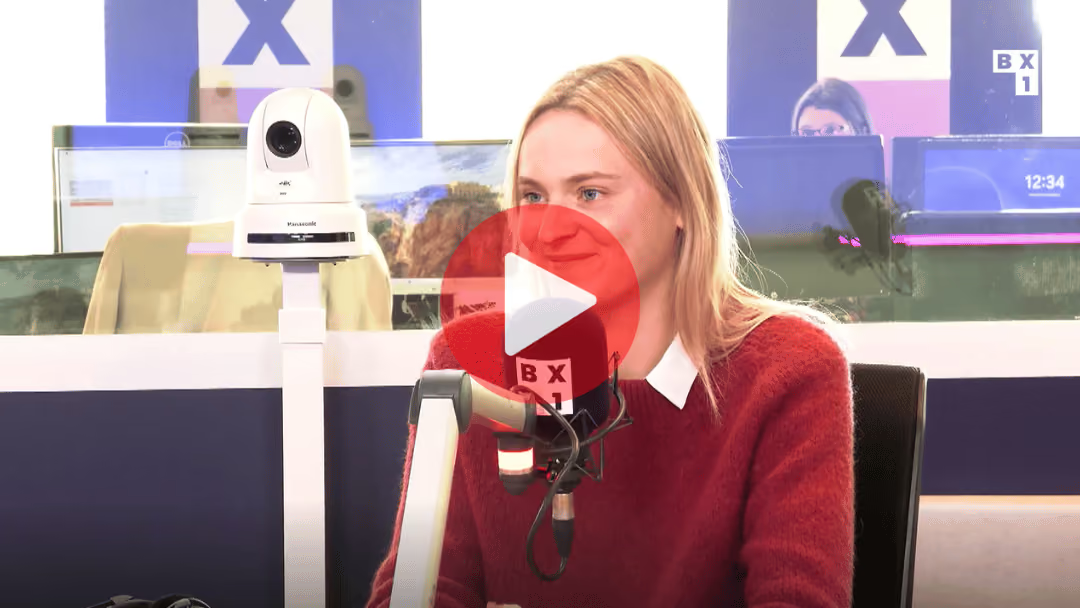
🎧 Margot, CEO and co-founder of eBloom, was a guest on the “Cas d’école” programme on BX1 to talk about burnout: how to spot it, what to do as a manager, and why listening to teams regularly makes all the difference.
Listen to the programme (in French) →


From HR digitalization to AI integration and new employee expectations, the human resources sector is rapidly changing. Based on responses from over 450 Belgian companies, our report gives you a head start to prepare your teams and strategy for the realities of tomorrow.